

Mastering Yoast SEO Online is essential for anyone serious about improving search visibility on WordPress websites. While many users install the plugin and rely on its traffic light indicators, few fully understand how to use it strategically. Proper configuration and interpretation of its recommendations can significantly enhance your on-page optimization workflow. Yoast SEO, developed by Yoast, is one of the most widely used SEO plugins for WordPress. It helps optimize meta titles, descriptions, schema markup, XML sitemaps, and readability structure, all aligned with modern ranking principles used by Google.
Unlike promotional pages that focus only on premium features, this guide explains how Yoast SEO actually works, how to use yoast seo content analysis effectively, how to interpret the Yoast readability score correctly, and how to apply wordpress seo optimization Yoast strategies for sustainable growth. If you want to move beyond green bullets and start optimizing strategically, this guide will walk you through the full process.
What Is Yoast SEO?
Yoast SEO Online refers to using Yoast SEO strategically within your website to optimize content, structure, and metadata for search engines. Developed by Yoast, this plugin simplifies technical and on-page SEO tasks inside WordPress without requiring advanced coding knowledge. At its core, Yoast SEO analyzes your content in real time. It evaluates keyword placement, meta descriptions, internal links, heading structure, and overall readability. The plugin generates SEO and readability indicators to guide improvements. These recommendations are based on best practices aligned with how Google evaluates page relevance and user experience.
The plugin works by scanning your page content and comparing it against optimization signals. It checks whether your focus keyword appears in key areas like the title, URL, first paragraph, headings, and meta description. Additionally, it assesses sentence length, paragraph structure, transition words, and passive voice usage to calculate the Yoast readability score. However, Yoast SEO does not guarantee rankings. It provides structured guidance based on optimization principles. When used correctly, combined with quality content and strong backlinks, it becomes a powerful assistant for WordPress SEO optimization in Yoast workflows. Understanding how the tool functions helps you apply its recommendations strategically instead of blindly chasing green indicators.
Yoast SEO Plugin Features
To use Yoast SEO effectively, it’s important to understand the core functionality behind its optimization system. The yoast seo plugin features are designed to simplify both technical and on-page SEO tasks inside WordPress. Rather than relying on manual code edits, the plugin provides structured controls directly within the post editor. One of the most important features is meta title and description management. Yoast SEO allows you to customize search snippets and preview how they will appear in search results. This supports click-through rate optimization aligned with ranking best practices from Google. Another key feature is automatic XML sitemap generation. Yoast SEO Online creates and updates sitemaps to help search engines crawl and index your pages efficiently. It also includes schema markup integration, enabling structured data implementation without technical configuration.
The plugin offers breadcrumb controls, canonical URL management, and redirect handling in premium versions. These settings strengthen internal linking and prevent duplicate content issues. Additionally, the real-time SEO and readability analysis system provides optimization guidance while you write. When applied correctly, the combined yoast seo plugin features support structured WordPress SEO optimization, Yoast workflows that improve discoverability, clarity, and overall content quality.
Yoast SEO Content Analysis
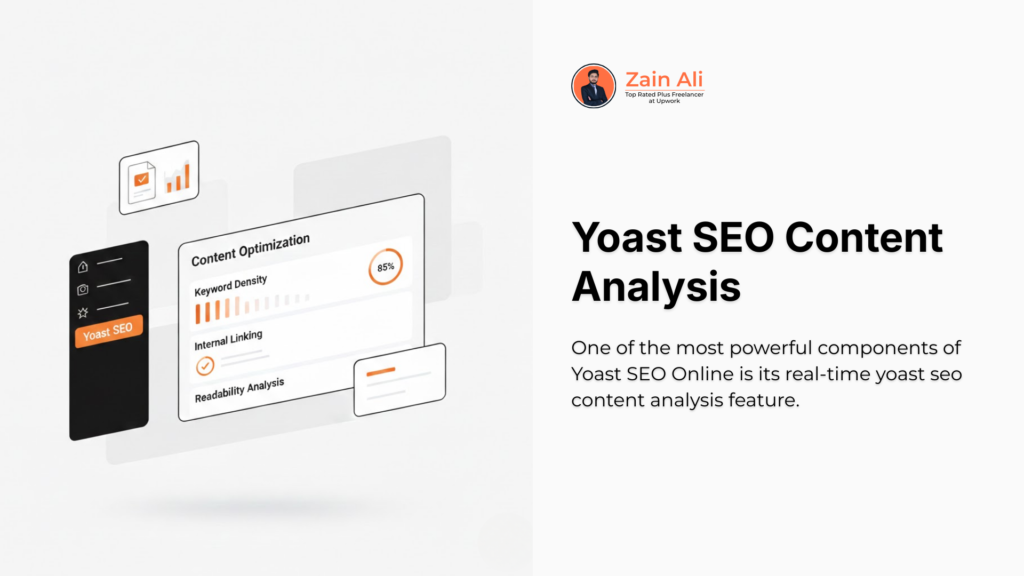
One of the most powerful components of Yoast SEO Online is its real-time yoast seo content analysis feature. This tool evaluates your content as you write, offering structured recommendations based on keyword placement, structure, and overall optimization quality. However, understanding how to interpret these signals is critical for effective use. Inside Yoast SEO, the SEO analysis checks whether your focus keyword appears in the title, URL slug, first paragraph, subheadings, and meta description. It also measures keyword density and internal linking suggestions. While these checks are helpful, they should support, not replace, strategic content creation.
Yoast SEO encourages proper heading structure (H1, H2, H3), short paragraphs, and optimized meta tags. These elements align with ranking practices used by Google, which prioritize clarity and relevance. It’s important not to chase green bullets blindly. Sometimes, over-optimizing for every indicator can harm natural readability. Instead, focus on covering the topic comprehensively and satisfying search intent first. Use yoast seo content analysis as a refinement tool rather than a content generator. When integrated into a structured workflow, Yoast SEO ensures your posts meet essential on-page optimization standards while maintaining content quality and user value.
Improving User Experience and Rankings
A key component of Yoast SEO Online is the evaluation of readability, measured through the Yoast readability score. While many users focus heavily on keyword optimization, readability plays a crucial role in user engagement and retention. Search engines like Google prioritize content that is easy to understand and structured for a positive user experience. Inside Yoast SEO, the readability analysis examines sentence length, paragraph structure, passive voice usage, subheading distribution, and transition words. These elements influence how easily readers can scan and absorb information. Short paragraphs, clear headings, and logical flow improve dwell time and reduce bounce rates.
The Yoast readability score does not directly impact rankings, but it indirectly supports SEO by improving user satisfaction signals. Pages that are easier to read tend to keep visitors engaged longer, which strengthens behavioral metrics. However, readability should complement depth, not replace it. Complex topics sometimes require longer explanations. The goal of Yoast SEO is not to oversimplify content but to ensure clarity and flow. When applied thoughtfully, optimizing readability enhances content quality, supports better user experience, and reinforces WordPress SEO optimization Yoast strategies for sustainable ranking performance.
WordPress SEO Optimization Yoast
Implementing Yoast SEO Online effectively requires more than activating the plugin. A structured wordpress seo optimization Yoast workflow ensures every page follows consistent optimization standards aligned with search engine guidelines. Step one is configuring global settings inside Yoast SEO. This includes setting title templates, enabling XML sitemaps, defining canonical URLs, and configuring schema markup. These foundational settings ensure search engines like Google can crawl and interpret your content properly. Step two involves keyword targeting. Use focus keywords strategically within titles, URLs, first paragraphs, and headings. Apply recommendations from yoast seo content analysis to refine placement naturally without keyword stuffing.
Step three focuses on readability and structure. Improve the Yoast readability score by shortening paragraphs, adding subheadings, and using transition words. Clear formatting enhances user engagement. Step four includes internal linking. Add contextual links to related articles to strengthen site structure and topical authority. Finally, preview and optimize meta titles and descriptions for click-through rate. Once published, monitor performance through Google Search Console. Following this, wordpress seo optimization, Yoast process transforms Yoast SEO from a simple plugin into a structured SEO system that supports long-term ranking improvements.
Yoast SEO Online vs Rank Math
When comparing Yoast SEO with Rank Math, the choice often comes down to user needs, experience level, and specific site goals. Both plugins are designed to improve WordPress SEO, but they differ in features, usability, and advanced options. Yoast SEO is one of the most widely trusted plugins, offering a clear interface and helpful guidance through features like yoast seo content analysis and Yoast readability score. Its recommendation system is beginner-friendly, helping site owners optimize content structure, meta tags, and readability without much technical knowledge. Yoast’s strength lies in simplicity and long-standing reputation, making it especially useful for those new to SEO.
Rank Math, on the other hand, often includes more advanced options in its free version. It combines detailed schema controls, multiple keyword targeting, and enhanced analytics into a single dashboard. Users who want deeper on-page optimization without upgrading to premium may find Rank Math appealing. It also includes an SEO performance tracking module built in, which can complement or replace other tools. That said, Yoast excels in guided workflows and is backed by a large support ecosystem from Yoast. Rank Math may offer more flexibility and technical features for power users. Ultimately, the “better” plugin depends on your goals:
- Yoast SEO Online for structured, beginner-friendly optimization
- Rank Math for feature-rich, advanced configuration
Both can coexist with strategic workflows; what matters most is how you apply their insights to improve search visibility.
Best Practices
To get the most value from Yoast SEO, it’s important to treat it as a strategic assistant, not an automatic ranking solution. Many website owners rely only on green indicators, but real optimization requires thoughtful implementation aligned with search intent and content quality. Start by setting up global configurations properly inside Yoast SEO. Configure title templates, meta descriptions, canonical URLs, and XML sitemaps before publishing content. These foundational settings help Google crawl and interpret your site accurately. Next, use yoast seo content analysis as a refinement tool. Write content naturally first, then adjust keyword placement strategically. Avoid overusing the focus keyword just to satisfy density checks. Relevance and depth matter more than perfect bullet indicators.
Pay attention to the Yoast readability score, but don’t oversimplify complex topics. Instead, improve structure by adding subheadings, shorter paragraphs, and transition words. Also, strengthen internal linking. Contextual links improve crawlability and topical authority. Combine Yoast SEO Online with performance insights from Google Search Console to track real ranking impact. When used consistently within a structured workflow, Yoast SEO becomes a powerful framework for sustainable WordPress SEO optimization.
Common Mistakes
While Yoast SEO Online simplifies optimization, many users misuse it and limit its effectiveness. One of the most common mistakes is obsessing over green traffic lights. The plugin’s indicators are guidelines, not guarantees. Search engines like Google do not rank pages based on plugin colors. Over-optimizing just to satisfy bullets can harm content quality. Another mistake is keyword stuffing. When using yoast seo content analysis, some users repeatedly insert the focus keyword unnaturally to increase density. This can reduce readability and trigger spam signals. Instead, focus on intent alignment and topic depth. Ignoring the Yoast readability score is also problematic. Poor structure, long paragraphs, and excessive passive voice can reduce user engagement. However, readability should enhance clarity, not oversimplify complex content.
Some site owners fail to configure global settings inside Yoast SEO. Without proper sitemap setup, canonical URLs, and schema markup, technical issues may remain unresolved. Another oversight is neglecting performance tracking. Yoast SEO does not replace analytics tools. Pair it with Google Search Console to validate keyword rankings and traffic growth. Avoiding these mistakes ensures Yoast SEO supports strategic optimization rather than mechanical checkbox adjustments.
Conclusion
In today’s competitive digital environment, using the right tools can make a significant difference in search visibility. Yoast SEO Online remains one of the most reliable solutions for WordPress users who want structured, guided optimization without technical complexity. Developed by Yoast, the plugin has earned long-standing trust within the SEO community. Through features like yoast seo content analysis, structured metadata controls, XML sitemaps, and the Yoast readability score, the plugin supports both technical and on-page optimization. While it does not directly control rankings, it aligns closely with how Google evaluates relevance, clarity, and user experience.