SaaS SEO isn’t just about getting traffic; it’s about attracting the right users, educating them through the funnel, converting them into paid customers, and keeping them engaged long after signup. In a landscape where paid ads are becoming more expensive and competitive every quarter, SaaS companies need an organic engine that brings in consistent, high-intent users without burning through budget. That’s exactly where this seo comes in.
Unlike traditional SEO, SaaS SEO must align with long sales cycles, multiple decision-makers, product-led onboarding, and the constant need to retain customers. Ranking alone won’t save you if visitors don’t convert. Likewise, conversions won’t matter if your content doesn’t retain and nurture users over time. This guide breaks down how SaaS brands can use SEO to rank, convert, and retain, the three pillars of sustainable SaaS growth in 2025 and beyond.
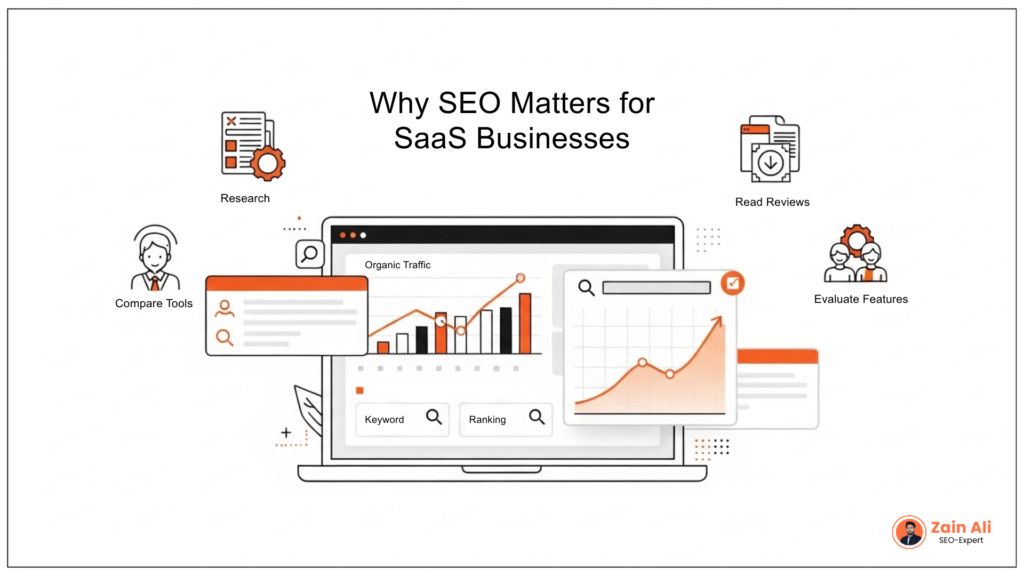
Why SEO Matters for SaaS Businesses
SaaS companies operate in one of the most competitive digital landscapes in the world. Customer acquisition costs rise every year, paid ads get more expensive, and user attention spans get shorter. In this environment, SaaS SEO becomes the most sustainable growth channel, because when done right, it brings in users who are actively searching for solutions your product already solves. Unlike e-commerce or local businesses, SaaS buyers don’t make decisions instantly.
They research pain points, compare tools, read reviews, explore alternatives, and evaluate features. Organic search meets them at every stage of this journey. From awareness-level blogs to high-intent comparison pages, SEO allows you to educate prospects long before they’re ready to buy. The result? Lower acquisition costs, higher trial sign-ups, more qualified leads, and a steady flow of users who convert and stick around. In SaaS, that’s everything.
Key SEO Challenges Unique to SaaS
SaaS companies don’t play by the same rules as e-commerce stores or local businesses. The search landscape is more competitive, the buyer journey is longer, and the keywords are often brutally difficult. Understanding these challenges is the first step to building a strategy that actually works.
Hyper-Competitive Keywords
Every SaaS company wants to rank for the same terms: “project management software,” “CRM tools,” “SEO platform.” These keywords are dominated by big players with massive authority. Without a focused strategy, you get drowned out instantly.
Long, Multi-Touch Buyer Journeys
SaaS buyers don’t convert on their first visit. They explore features, compare tools, read case studies, and need multiple touchpoints before signing up. Your SEO must cover all funnel stages, not just ToFu blogs.
Constant Product Updates Break SEO
New features, updated dashboards, and UI changes often require reworking feature pages and documentation. If SEO isn’t aligned with product development, rankings tank.
Low-Volume, High-Intent Keywords
Many SaaS tools solve niche problems. Keyword volumes may be small, but intent is extremely high. You need precision targeting to win.
Difficulty Creating Demand
Some SaaS products sell solutions people don’t even know they need. Your SEO must educate the market before you can convert it. Master these challenges, and you create a foundation that most SaaS companies never build, which becomes your advantage.
How to Build a SaaS SEO Strategy: Rank, Convert, and Retain Users
SaaS SEO isn’t about writing random blogs or chasing impossible keywords; it’s about building a structured, predictable system that attracts the right users, guides them through the funnel, and keeps them engaged long after signup. Below is the core framework used by top SaaS companies dominating organic search today.
Start With SaaS Keyword Research
SaaS users move slowly through the funnel, so your keyword strategy must match that behaviour.
Top-of-Funnel
- “How to…” queries
- Pain-point keywords
- Broad industry terms
Middle-of-Funnel
- Feature-based searches
- Workflow terms
- Product-led education content
Bottom-of-Funnel
- “[Tool] alternatives”
- “[Tool] vs [Tool]”
- “Best [category] software.”
- Pricing & feature comparison pages
This funnel-based keyword grouping is how high-growth SaaS brands steal market share from bigger competitors.
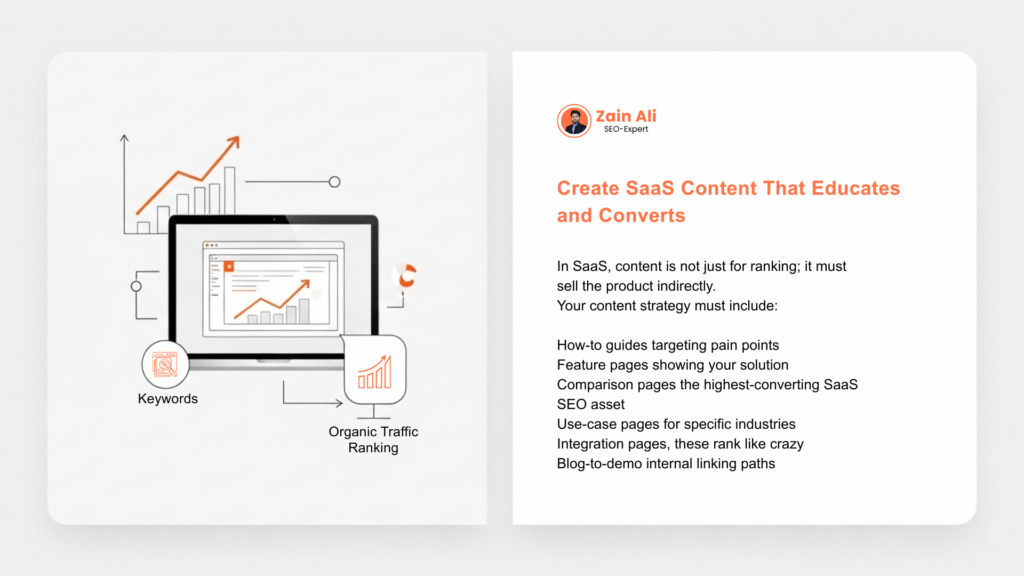
Create SaaS Content That Educates and Converts
In SaaS, content is not just for ranking; it must sell the product indirectly.
Your content strategy must include:
How-to guides targeting pain points
Feature pages showing your solution
Comparison pages the highest-converting SaaS SEO asset
Use-case pages for specific industries
Integration pages, these rank like crazy
Blog-to-demo internal linking paths
Every page should lead to a conversion moment: Sign up → Demo → Free Trial.
Optimize Product, Feature & Pricing Pages for SEO + Conversions
Most SaaS companies forget that their money pages also need SEO.
Your product and feature pages must include:
- Clean H1/H2 structure
- Clear CTAs (Book a Demo, Start Free Trial)
- Benefit-driven copy
- Schema markup for SaaS products
- Fast mobile performance
- Trust badges, case studies, testimonials
These pages are your real conversion engine, not the blog.
Build Rock-Solid Technical SEO Infrastructure
A SaaS website grows fast, new features, new pages, new docs.
To avoid chaotic indexing issues, focus on:
- Crystal-clear URL architecture
- Fast-loading pages
- Proper use of canonicals
- Fixing crawl errors
- Avoiding duplicate content from docs/help centers
- Maintaining a clean sitemap
Technical SEO becomes more important as your SaaS scales.
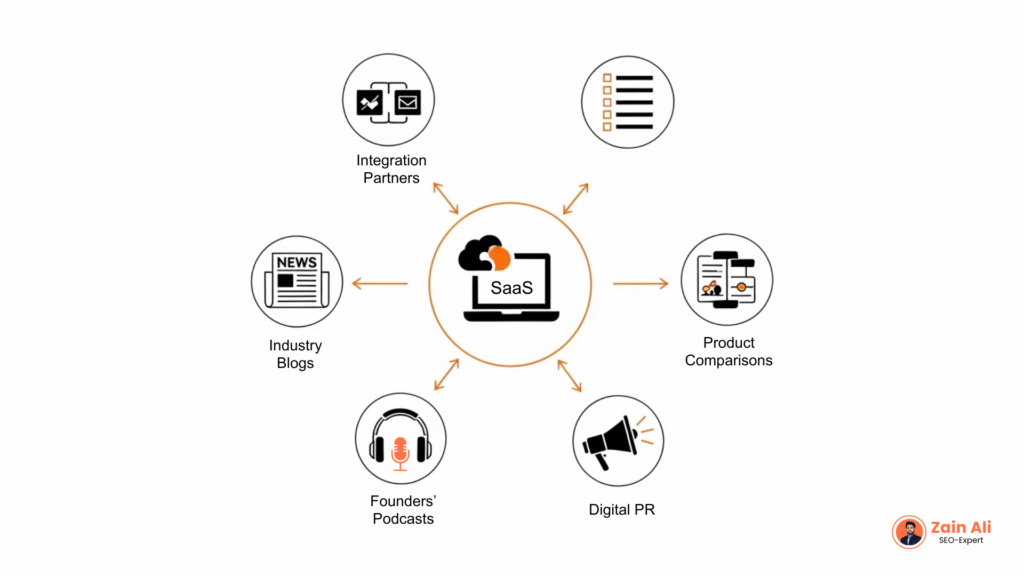
Build High-Authority SaaS Backlinks the Smart Way
SaaS link building isn’t about guest posting on random blogs.
It’s about earning links from:
Integration partners
SaaS directories
Industry blogs
Product comparisons
Resource pages
Founders’ podcast features
Digital PR for new features
These links build authority and help your decision-stage pages rank faster.
Use SEO for User Retention
This is where most SaaS companies fail.
Retention-focused SEO includes:
- Publishing feature update pages
- Creating “how to use” tutorials
- Adding product walkthrough blogs
- Building integration-based content
- Keeping docs and the knowledge base SEO-friendly
Common Mistakes SaaS Companies Make in SEO
SaaS teams often treat SEO like traditional blogging or random keyword targeting, and that’s exactly why most SaaS brands never break out of plateaued traffic, low conversions, and weak retention. Here are the most expensive (and most common) mistakes SaaS companies make. Publishing endless “how-to” blogs without any conversion path is the fastest way to grow vanity metrics instead of revenue. Traffic with no intent = wasted effort. Most SaaS teams chase keywords competitors rank for, instead of mapping:
Pain-points → Features → Use-cases → Integrations → Comparisons
SaaS SEO requires full-funnel precision, not random topics. Feature pages often rank for the highest-intent commercial queries, yet SaaS companies forget to optimize them for SEO, structure, or conversions. If your feature pages are weak, your conversions will always be weak.“[Your Product] vs [Competitor]” and “Alternative to [Competitor]” pages are money makers. Ignoring them or letting them get outdated hands your competitors the win.
New features, pricing updates, dashboard screenshots, if product updates don’t sync with SEO, you create outdated content, broken links, and inaccurate pages that drop rankings.SaaS evolves fast. If your SEO doesn’t evolve with it, rankings die. SEO must be continuous: updating content, improving architecture, and adding new high-intent pages.
Conclusion
SaaS SEO isn’t about chasing traffic; it’s about building a predictable, scalable engine that attracts the right users, converts them into paying customers, and keeps them engaged long after signup. When you align your keyword strategy, content, technical SEO, and product-led pages into a unified system, you create momentum that compounds month after month. The SaaS companies winning in 2025 aren’t the ones publishing random blogs; they’re the ones creating full-funnel SEO strategies backed by strong feature pages, integration content, and user-retention assets. Implement these frameworks consistently, and your SaaS will not only rank but it will grow efficiently, sustainably, and faster than competitors relying on paid ads alone.