

A well-planned guest posting strategy is one of the most effective ways to build authority, earn high-quality backlinks, and grow organic traffic through white hat SEO. Guest posting strategy, also known as guest blogging, involves publishing content on relevant websites within your niche to reach new audiences and strengthen search visibility. When done correctly, it supports long-term SEO rather than short-lived ranking boosts.
Unlike outdated link-building tactics, a modern strategy focuses on value-driven content, relevance, and genuine relationships. Search engines like Google prioritize editorial links earned through quality contributions rather than manipulative practices. This is why white hat guest posting strategy has become a core component of sustainable SEO campaigns. In this guide, you’ll learn how to plan, execute, and scale a guest posting strategy approach that aligns with search engine guidelines.
Guest Posting and Its Role in SEO
Guest posting strategy plays a crucial role in modern content marketing and search engine optimization. At its core, guest posting allows brands and individuals to publish content on authoritative platforms to expand reach and build credibility. When aligned with a clear guest posting strategy, it becomes a powerful SEO asset rather than just a content distribution method.
Search engines evaluate backlinks as trust signals, and guest posts provide editorial links that indicate authority and relevance. However, not all guest posts deliver equal value. Low-quality placements, irrelevant sites, or paid link schemes can harm rankings rather than improve them. A structured approach helps avoid common pitfalls while maximizing long-term benefits such as referral traffic, brand mentions, and domain authority growth. This foundation is essential before moving into tactics and execution.

Why a Guest Posting Strategy Matters for SEO?
A consistent strategy is essential for long-term SEO because it builds authority gradually and naturally. Unlike short-term tactics that chase quick links, guest posting strategy focuses on earning editorial mentions from relevant, trusted websites. Search engines like Google use backlinks as signals of credibility, and links from high-quality guest posts tend to be more durable and impactful over time. What makes a strategy effective is its emphasis on relevance and value.
When your content appears on sites within your niche, it sends clear topical signals to search engines. This strengthens domain authority, improves keyword rankings, and drives referral traffic from audiences already interested in your subject. Over months, these signals compound, supporting steady growth rather than sudden spikes followed by drops.
From a risk perspective, a white hat guest posting strategy also protects your site from algorithm penalties. By avoiding spammy networks and paid link schemes, you align your efforts with search engine guidelines. This approach ensures that links remain active and beneficial for years. In competitive niches, a well-executed guest posting strategy becomes a reliable foundation for sustainable SEO success rather than a one-time campaign.
Defining Goals for a Guest Posting Strategy?
Before executing any outreach or publishing content, you need clearly defined goals for your strategy. Without direction, a guest posting strategy turns into random link building instead of a structured SEO asset. For example, if your objective is SEO growth, your strategy should prioritize relevant websites with strong editorial standards. Search engines like Google value contextual links tied to meaningful content, not links placed solely for manipulation.
A successful strategy also considers audience alignment. Publishing on sites read by your target users increases engagement and brand recognition, even beyond SEO benefits. Clear goals influence anchor text usage, content depth, and link placement, ensuring each guest post serves a specific purpose. By defining success upfront, whether that’s rankings, traffic, or authority, you create consistency across campaigns. This clarity allows you to evaluate performance accurately and refine your approach over time, making guest posting strategy a repeatable and scalable SEO investment rather than a one-off effort.
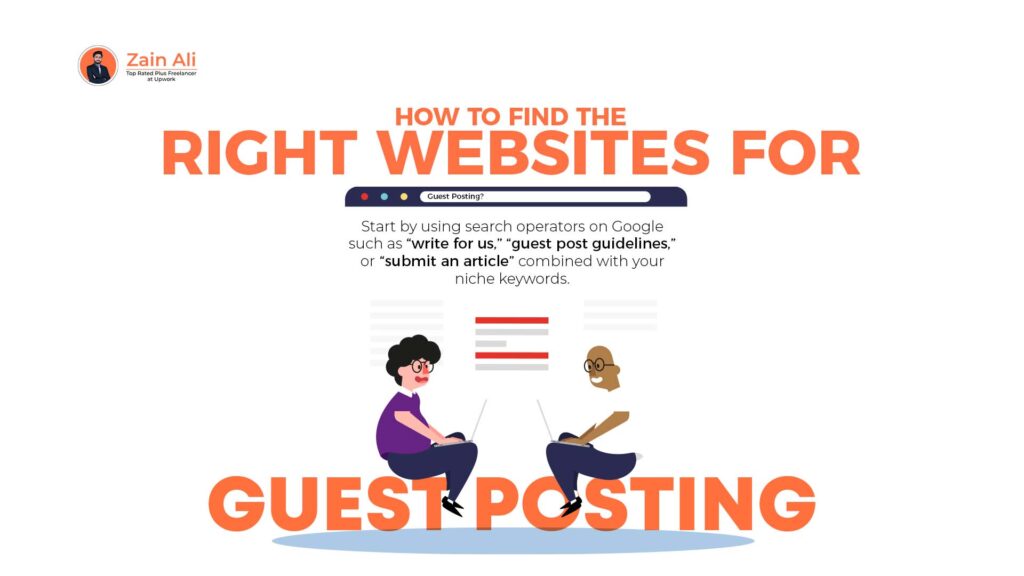
How to Find the Right Websites for Guest Posting?
Finding the right websites is a critical step in building a sustainable guest posting strategy. The goal isn’t to publish anywhere that accepts guest posts, but to secure placements on relevant sites, trusted and actively engaged with their audience. Start by using search operators on Google such as “write for us,” “guest post guidelines,” or “submit an article” combined with your niche keywords. You can also analyze competitor backlinks to identify blogs that already accept guest contributions. This approach reveals proven opportunities rather than guessing blindly.
Beyond relevance, evaluate quality signals. Check content depth, publishing consistency, organic traffic, and editorial standards. Avoid sites filled with thin articles or excessive outbound links, as these can weaken SEO value. Audience engagement, comments, social shares, and author credibility also indicate whether a site is worth targeting. A smart approach is to build a shortlist of vetted sites and categorize them by authority and topic focus. This makes outreach more efficient and ensures each placement supports long-term SEO goals. When website selection is done carefully, guest posting strategy becomes a powerful asset instead of a risky shortcut.
Guest Blogging Strategy
A strong guest blogging strategy starts with topic planning that aligns with both the host site’s audience and your own SEO goals. Editors receive dozens of pitches, so generic or self-promotional ideas are usually ignored. This research-driven approach shows editors you understand their audience and editorial standards. When planning topics within your strategy, focus on solving real problems rather than pushing keywords.
Trending discussions, data-backed insights, and practical how-to guides perform particularly well. You can also repurpose proven content from your own site by adapting it to the host blog’s tone and audience expectations. This keeps quality high while saving time. Another key factor is intent matching. Editors prefer topics that encourage engagement, comments, and social sharing.
Guest Post Outreach Techniques
Effective guest post outreach techniques are the backbone of any successful guest posting strategy. Even the best content ideas fail if outreach emails feel generic or self-serving. Editors want to collaborate with contributors who respect their platform, understand their audience, and offer genuine value, not mass-sent pitches. Start with personalization. Reference a specific article, recent update, or editorial guideline from the target site to show real interest.
Outreach emails that clearly explain why your topic fits the blog perform far better than vague introductions. Keep the message concise, respectful, and benefit-focused. Instead of asking for a link, explain how your post will help their readers. Timing and follow-ups also matter. Avoid sending multiple reminders in short intervals. A single polite follow-up after a week is usually enough.
Effective Guest Posting Tips
Following effective guest posting strategy tips is essential if you want your content to get published and deliver real SEO value. High-quality guest posts are not just well-written; they are tailored to the host site’s audience, tone, and editorial standards. Within a strong strategy, content quality is what separates trusted contributors from one-time placements. Start by matching the format and depth of the target blog. If the site publishes long-form guides, short opinion pieces won’t perform well.
White Hat Guest Posting
White hat guest posting is about earning links and visibility by following search engine guidelines and prioritizing user value. Within a sustainable strategy, this approach minimizes risk while maximizing long-term SEO benefits. Rather than buying links or using private networks, white hat methods focus on editorial placements, relevance, and quality signals that search engines trust. Search engines like Google are clear about what they reward: original content published for users, not links placed for manipulation.
Tracking and Measuring Results
Tracking performance is essential to understand whether your guest posting strategy is delivering meaningful results or just consuming time. Without measurement, it’s impossible to know which placements, topics, or outreach methods are actually contributing to SEO growth. Effective tracking turns guest posting from guesswork into a data-driven process. Start by monitoring referral traffic from published guest posts using tools like Google Analytics. This shows how many visitors arrive from each placement and how they behave on your site.
Common Guest Posting Mistake
Even with a solid plan, many marketers undermine their guest posting strategy by repeating common mistakes. One of the biggest errors is prioritizing quantity over quality. Publishing on low-authority or irrelevant sites may increase link count, but it rarely improves rankings and can even damage trust signals. Always focus on relevance and editorial standards rather than volume. Another frequent mistake is overly aggressive anchor text.
Stuffing exact-match keywords into every link raises red flags with search engines like Google. To avoid this, keep anchors natural and context-driven, ensuring links add value for readers. Diversifying anchor text is a key part of staying compliant with white hat practices.
Conclusion
A well-executed guest posting strategy is not about chasing quick links; it’s about building lasting authority through value, relevance, and consistency. When guest posting is aligned with clear goals, quality content, and ethical outreach, it becomes one of the most reliable ways to strengthen SEO and brand visibility over time. As covered throughout this guide, success depends on choosing the right websites, planning topics strategically, using effective outreach techniques, and following white hat principles.