
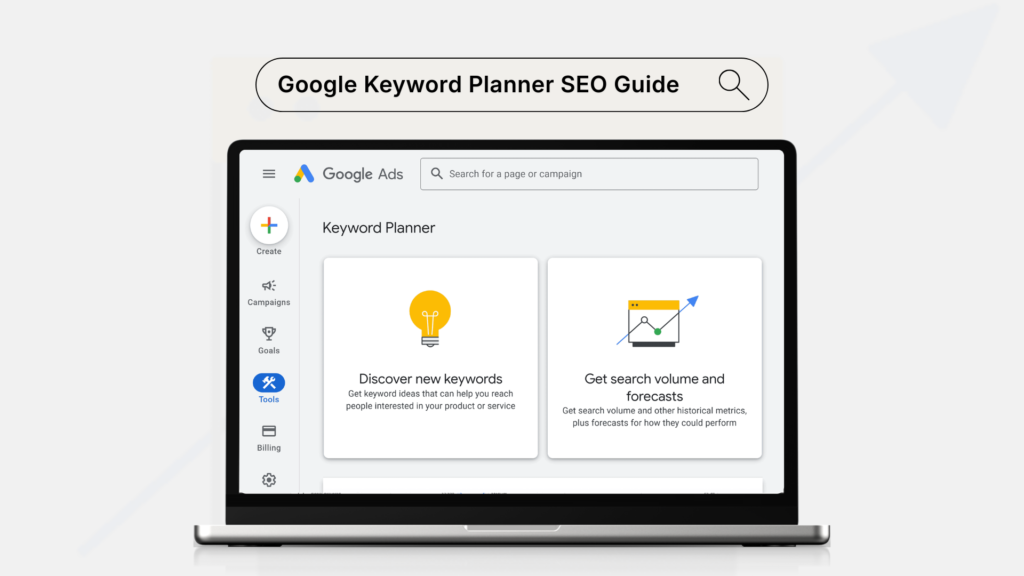
Mastering Google Keyword Planner is essential for building a strong SEO foundation based on real search data. While many marketers associate it primarily with paid campaigns, this powerful tool also plays a crucial role in organic keyword research and content planning. When used strategically, it helps uncover search demand, understand competition levels, and prioritize topics with measurable potential. It is part of Google Ads, developed by Google to help advertisers discover keywords and estimate traffic. However, SEO professionals increasingly use it for search volume keyword research and content strategy planning.
Unlike many third-party tools, it provides direct data from Google’s ecosystem. This makes it highly reliable for identifying real search trends and forecasting traffic potential. In this guide, you’ll learn how to use the tool effectively, apply keyword research with Google Planner for SEO, analyze competition correctly, and turn raw keyword data into actionable ranking strategies.
What Is Google Keyword Planner?
Understanding it begins with recognizing its role inside the Google Ads ecosystem. Originally designed to help advertisers plan campaigns, this tool has become a powerful resource for SEO professionals seeking reliable keyword data. It provides insights into search volume, competition level, and forecasted traffic estimates directly from Google’s advertising database. It works through two main features: “Discover new keywords” and “Get search volume and forecasts.” The first option generates keyword ideas based on seed terms, website URLs, or product categories. The second allows users to analyze historical data, including monthly searches and bid estimates.
Although primarily built for PPC, the tool is widely used for search volume keyword research in SEO strategy. It helps identify high-demand topics, long-tail variations, and seasonal trends. Unlike many third-party platforms, Google Keyword Planner draws data directly from Google’s internal search activity, making it highly credible. However, users must understand that some volume data appears in ranges unless ad spend is active. For more precise analysis, SEO professionals often combine Google Keyword Planner with tools like Ahrefs or Google Search Console. When used strategically, Google Keyword Planner becomes more than an ad tool; it becomes the foundation for data-backed keyword planning and scalable SEO growth.
How to Access and Set Up it?
Accessing it requires a free account within Google Ads. Although originally designed for advertisers, the tool can be used for SEO research without running paid campaigns. The process is straightforward, but understanding setup options ensures you get accurate data for keyword planning. First, sign in to your Google account and navigate to Google Ads. If you are prompted to create a campaign, choose the option to switch to expert mode and skip campaign setup. This allows access to the tool without launching ads. Once inside the dashboard, click on “Tools & Settings,” then select Keyword Planner under the Planning section.
After entering the tool, you’ll see two primary options: discovering new keywords or reviewing search volume and forecasts. Before starting research, adjust location, language, and search network settings to match your target audience. These filters directly impact your search volume keyword research results. It’s also important to align settings with your SEO strategy rather than PPC intent. For example, focus on organic search trends instead of bid estimates unless you are combining paid and organic campaigns. Since the data originates from Google’s search ecosystem, accuracy improves when filters reflect real audience targeting. Proper setup ensures it delivers relevant insights that support effective keyword research with Google Planner for SEO-driven growth.
Google Keyword Planner Tool
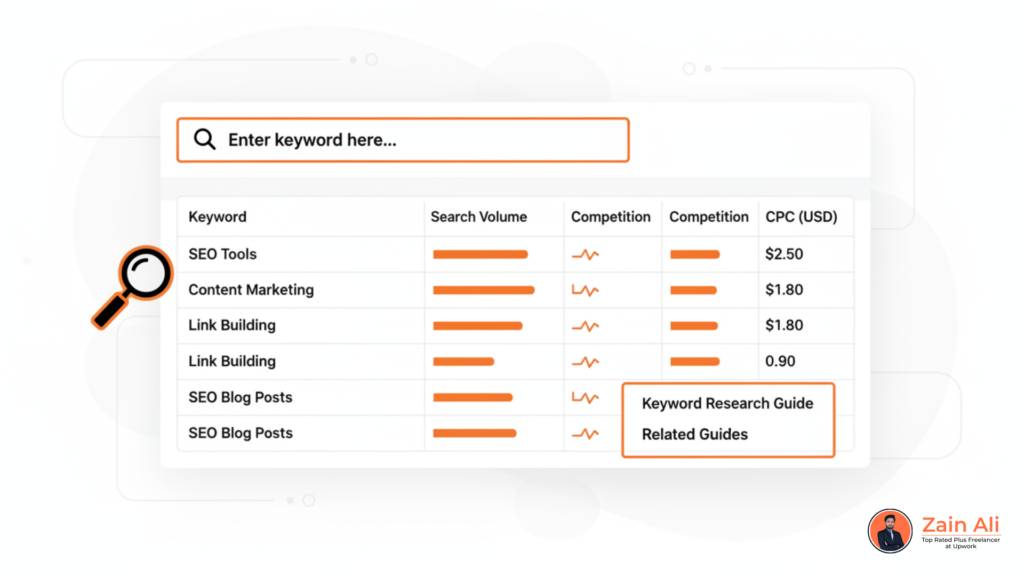
The most powerful feature inside it is its ability to discover new keyword ideas based on real search behavior. Using the “Discover new keywords” option in the Google Keyword Planner tool, you can enter seed terms, competitor URLs, or product categories to generate a large list of related search queries. Once you input a primary keyword, the tool provides hundreds of variations, including long-tail phrases and related concepts. These suggestions are drawn directly from Google’s search data, making them highly reliable for search volume keyword research. Each result includes average monthly searches, competition level, and suggested bid data.
For SEO-focused research, the key is filtering strategically. Remove overly broad terms and prioritize long-tail keywords that show consistent search demand but lower competition. This is where keyword research with Google Planner becomes especially valuable. Instead of chasing high-volume terms that are difficult to rank for, you can identify achievable opportunities aligned with search intent. You can also analyze seasonal trends by adjusting the date range. This helps uncover peak demand periods and supports content planning for upcoming campaigns. By using the discovery feature strategically, it becomes more than a PPC resource; it becomes a powerful tool for building topic clusters, identifying content gaps, and scaling organic keyword targeting efficiently.
Keyword Research with Google Planner
Effective keyword research with Google Planner goes beyond generating ideas; it requires filtering and analyzing data strategically. Inside it, once you’ve generated keyword suggestions, the real work begins. Without proper filtering, large datasets can become overwhelming and difficult to prioritize. Start by adjusting filters for location, language, and date range to match your target audience. These settings directly influence search volume results and ensure accuracy. Next, sort keywords by average monthly searches to identify consistent demand patterns. For search volume keyword research, look for steady volume rather than short spikes unless targeting seasonal topics.
Competition data inside the Google Ads keyword planner reflects advertiser demand, not SEO difficulty. While high competition may indicate commercial intent, it does not automatically mean the keyword is impossible to rank organically. Combine this insight with manual SERP analysis to evaluate ranking feasibility. Another important step is grouping related keywords into thematic clusters. This helps build structured content strategies rather than targeting isolated terms. Since the data originates from Google, it reflects real user search behavior, making it reliable for SEO planning. By applying structured filters and intent analysis, keyword research with Google Planner transforms raw keyword lists into actionable strategies that support scalable organic growth.
Google Ads Keyword Planner vs SEO
Although Google Keyword Planner is widely used for SEO, it was created for paid advertising inside Google Ads. Understanding the difference between the Google Ads keyword planner perspective and SEO usage is essential for accurate strategy development. In paid campaigns, it helps advertisers estimate bids, forecast clicks, and allocate budgets. Metrics such as competition level and cost-per-click (CPC) are designed to support ad placement decisions. However, in SEO, the focus shifts from ad cost to organic ranking potential and search intent alignment.
For SEO professionals, the most valuable aspect of it is search volume keyword research. Instead of analyzing bid ranges, marketers prioritize monthly searches, trend consistency, and keyword variations. Since the tool draws data directly from Google’s search ecosystem, it provides reliable demand indicators. However, SEO users must recognize its limitations. The competition metric reflects advertiser density, not ranking difficulty. Therefore, combining it with tools like Ahrefs or SERP analysis creates a more balanced strategy. When used with the correct context, it becomes a dual-purpose tool. It supports paid campaigns while offering valuable insights for keyword research with Google Planner in organic SEO planning.
Search Volume Keyword Research
Accurate search volume keyword research is one of the primary reasons marketers rely on it. However, interpreting the data correctly is just as important as collecting it. Many beginners assume that high search volume automatically means high ranking potential, but this is not always true. Inside this tool, search volume represents the average number of monthly searches for a keyword over a selected time period. These figures are based on real data from Google. However, some accounts see ranges (e.g., 1K–10K) instead of exact numbers unless running active campaigns through Google Ads.
When performing keyword research with Google Planner, focus on patterns rather than isolated numbers. Consistent demand across months often signals evergreen content opportunities. Seasonal spikes may indicate trend-based content potential. Also, compare related keyword variations to identify long-tail opportunities with lower competition. Another important factor is search intent. A keyword with moderate volume but strong commercial or informational alignment may outperform a high-volume keyword with unclear intent. Combine volume analysis with SERP evaluation to assess ranking feasibility. By interpreting search volume data strategically rather than literally, Google Keyword Planner becomes a powerful tool for building scalable, intent-driven SEO strategies.
Advanced Tips to Use
Once you understand the basics, advanced use of Google Keyword Planner can significantly improve your SEO planning process. Instead of using it only to collect keyword lists, strategic implementation transforms it into a content roadmap tool aligned with search intent and competitive positioning. One advanced tactic is competitor-based keyword discovery. Inside the tool, you can enter a competitor’s URL to extract keyword ideas related to their content. This supports deeper keyword research with Google Planner by revealing search terms already associated with high-ranking pages.
Another powerful method is clustering related keywords into topic groups. Instead of targeting single phrases, group similar search terms into pillar and supporting content. This strengthens topical authority in the eyes of Google. Use location targeting strategically to identify regional opportunities. Filtering by specific cities or countries reveals localized keyword demand that competitors may overlook. This is particularly useful for service-based businesses.
Additionally, combine volume insights from the Google Ads keyword planner with performance data from Google Search Console. Comparing actual impressions with estimated search volume helps validate keyword opportunities. Finally, analyze seasonal trends by adjusting date ranges to predict future demand shifts. This allows you to publish content before traffic spikes occur. By applying these advanced techniques, it becomes more than a research tool; it becomes a structured system for long-term SEO growth.
Common Mistakes
While it is a powerful resource, many marketers misuse it and limit its effectiveness. One of the most common mistakes is relying solely on search volume without considering intent or competition context. High-volume keywords may appear attractive, but they are often highly competitive and difficult to rank for organically. Another frequent error is misunderstanding the competition metric inside the Google Ads keyword planner. This metric reflects advertiser competition, not organic ranking difficulty. Treating it as an SEO difficulty score can lead to poor keyword targeting decisions.
Many users also fail to apply filters properly. Without adjusting location, language, and date range settings in the tool, search data may not reflect your actual audience. Inaccurate filters distort search volume and keyword research, and produce misleading results. Ignoring long-tail keywords is another strategic mistake. Broader keywords attract more competition, while long-tail phrases often deliver higher conversion rates and clearer search intent alignment.
Additionally, some marketers treat it as a standalone solution. While it provides reliable demand data from Google, combining it with tools like Google Search Console or Ahrefs produces more balanced insights. Avoiding these mistakes ensures that Google Keyword Planner supports structured, data-driven SEO rather than leading to misguided keyword selection.
Conclusion
Mastering Google Keyword Planner is a foundational step toward building a data-driven SEO strategy. While originally designed for advertisers, the tool offers valuable insights that extend far beyond paid campaigns. When used correctly, it supports accurate search volume keyword research, identifies scalable content opportunities, and strengthens long-term organic growth. Because the data comes directly from Google, it reflects real user search behavior rather than estimated third-party metrics. This makes the tool especially useful for understanding demand trends, seasonal fluctuations, and emerging keyword variations. However, true effectiveness comes from interpretation, not just collection.