
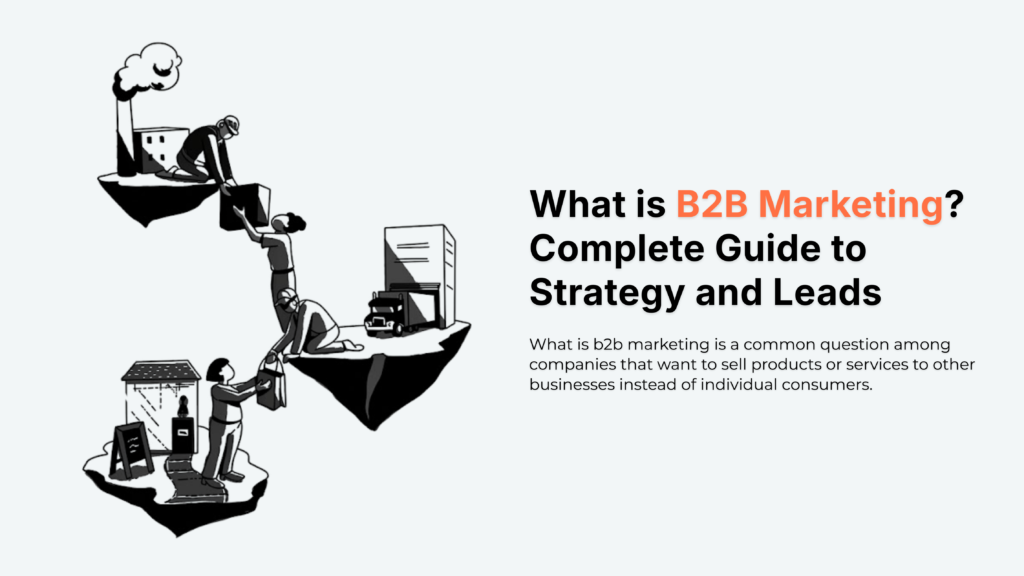
What is b2b marketing is a common question among companies that want to sell products or services to other businesses instead of individual consumers. B2B marketing (Business-to-Business marketing) focuses on building relationships between organizations and guiding potential buyers through a structured buyer journey. Unlike traditional B2C marketing, purchasing decisions in B2B environments involve multiple stakeholders such as managers, procurement teams, and executives.
Modern companies use a combination of B2B marketing, B2B content marketing, and Business to business lead generation techniques to reach qualified prospects. Channels like SEO, email marketing, LinkedIn, and marketing automation platforms help businesses attract and nurture leads before converting them into customers. By aligning marketing with B2B sales, organizations can improve conversion rates, strengthen partnerships, and generate long-term revenue growth in competitive digital markets.
Understanding What Is B2B Marketing?
To clearly understand What is b2b marketing, it is important to look at how companies promote products or services to other businesses instead of individual consumers. In a B2B environment, marketing focuses on solving business problems, improving efficiency, and helping organizations achieve measurable results. Companies often rely on strong B2B marketing, supported by B2B contents marketing, targeted campaigns, and professional networking platforms like LinkedIn.
Unlike consumer marketing, business to business sales usually involve a longer buyer journey, multiple decision-makers, and detailed research before a purchase is made. Businesses must therefore provide valuable content, data-driven insights, and clear benefits to build trust with potential buyers.
Why Understanding What Is B2B Marketing Matters?
Learning b2b marketing helps companies design campaigns that attract the right audience and generate qualified opportunities. When organizations understand the concept clearly, they can improve B2B lead generation, build stronger relationships with business clients, and align marketing with B2B sales teams. This alignment ensures that marketing efforts support sales goals, resulting in higher conversion rates and more sustainable business growth
B2B Content Strategy for Lead Generation
B2B content strategy is a key part of understanding what is b2b marketing because it helps businesses attract and educate potential clients. Instead of focusing on direct advertising, companies create valuable content that answers industry questions and provides useful insights. Common formats include blog posts, case studies, whitepapers, webinars, and industry reports that help decision-makers understand problems and explore possible solutions.
This content supports effective Business to business lead generation by bringing targeted visitors through SEO, professional networks like LinkedIn, and email campaigns. When businesses consistently publish high-quality information, they build credibility and position themselves as experts in their field. Another advantage of B2B marketing is its ability to guide prospects through the buyer journey. Educational content creates awareness, while detailed resources such as case studies and reports help buyers evaluate options. By integrating content into a strong B2B marketing strategy, companies can nurture leads more effectively and prepare them for conversations with B2B sales teams.
Business to business lead generation Strategies That Work
A key part of understanding b2b marketing is learning how businesses attract and convert potential clients through effective Business to business lead generation strategies. Companies use multiple digital channels to identify decision-makers and guide them through the buyer journey. A strong B2B marketing usually combines SEO, email marketing, social media campaigns, and a valuable B2B content strategy to reach the right audience.
One effective approach is inbound marketing, where businesses create helpful content such as blogs, guides, and case studies to attract prospects who are already searching for solutions. This strategy naturally improves B2b leads generation because it brings highly relevant visitors into the sales funnel. Businesses also use LinkedIn marketing, webinars, and targeted advertising to reach professionals and industry leaders. With the help of CRM systems and marketing automation tools, companies can track user behavior, nurture prospects with personalized communication, and move qualified leads toward B2B sales opportunities.
B2B Content Strategy in What Is B2B Marketing?
B2B content advertising is the practice of creating and distributing valuable, relevant content to attract and engage other businesses. Unlike B2C content, it focuses on educating decision-makers, building trust, and supporting business-to-business sales. Examples include whitepapers, case studies, blogs, and webinars, all designed to guide prospects through the buyer journey.
Effective B2B Marketing Channels
To fully understand what is b2b marketing, businesses must know which channels are most effective for reaching professional audiences. Successful companies rarely depend on a single platform. These channels support B2B generation, improve brand visibility, and create opportunities for B2B sales teams.
SEO and Search Marketing
Search engines play a critical role in b2b marketing because many professionals begin their research online. A strong SEO strategy combined with a B2B content strategy helps businesses publish useful resources such as guides, blog posts, and case studies that answer real business questions. This approach supports consistent Business to business lead generation while building long-term credibility in the market.
Social Media Channels in What Is B2B Marketing
Another important part of b2b marketing involves professional networking platforms. LinkedIn is widely considered the most powerful social media channel for B2B marketing because it connects businesses with industry leaders, decision-makers, and potential partners.
The Role of Business-to-Business Sales
Understanding b2b marketing also requires recognizing the close relationship between marketing activities and B2B sales. While marketing focuses on attracting and educating potential customers, the sales team is responsible for converting those opportunities into paying clients. When marketing and sales teams work together, companies can move prospects smoothly through the sales funnel and increase overall revenue.
In a well-structured B2B marketing, marketing teams generate awareness and support Business to business lead generation through B2B marketing, SEO, and digital campaigns. Another important factor in b2b marketing is sales and marketing alignment. Both teams must share data through tools such as CRM platforms, analytics dashboards, and marketing automation systems. This collaboration helps track customer interactions, improve lead nurturing, and ensure that marketing efforts deliver qualified prospects ready for B2B sales conversations.
Technology and Tools in B2B Marketing
Technology plays a vital role in understanding what is b2b marketing and how companies manage modern marketing campaigns. Businesses rely on advanced tools to automate processes, analyze customer behavior, and improve their overall B2B marketing. One of the most important tools in B2B marketing is a CRM (Customer Relationship Management) system. Platforms like Salesforce, HubSpot, and other CRM solutions allow businesses to store customer data, monitor interactions, and manage the sales funnel more efficiently.
These systems help marketing teams identify marketing-qualified leads (MQLs) and pass them to B2B sales teams for further engagement. Another essential technology is marketing automation software, which simplifies tasks such as email campaigns, lead nurturing, and customer segmentation. By using these technologies together, companies gain deeper insights into the buyer journey and create more personalized marketing experiences.
Benefits of B2B Marketing for Businesses
A clear understanding of b2b marketing helps organizations unlock several long-term benefits. When businesses implement a well-planned B2B marketing, they can reach the right decision-makers and build stronger professional relationships. Effective marketing efforts also support consistent B2B leads generation, allowing companies to attract potential clients who are genuinely interested in their products or services. One major advantage of what is b2b marketing is the ability to create long-term partnerships rather than one-time transactions. Through B2B marketing, companies educate prospects, provide industry insights, and demonstrate expertise.
This builds trust and increases the chances that potential buyers will choose the company when making purchasing decisions. Another benefit is improved alignment between marketing activities and B2B sales teams. When marketing campaigns deliver qualified leads, sales professionals can focus on closing deals and nurturing relationships. Over time, this collaboration improves conversion rates, strengthens brand authority, and creates sustainable growth opportunities for businesses operating in competitive markets.
Challenges in B2B Marketing
Even after understanding b2b marketing, many organizations face challenges when implementing a successful B2B marketing. One of the greatest difficulties is the long buyer journey involved in business purchases. Unlike consumer markets, B2B decisions often require approval from multiple stakeholders such as managers, financial teams, and executives. This complexity makes Business to business lead generation slower and requires consistent communication with potential clients. Another common challenge in b2b marketing is creating content that truly connects with professional audiences.
Without strong content, companies may struggle to attract qualified leads or build credibility in competitive industries. Companies also face difficulties in aligning marketing efforts with B2B sales teams. If both teams do not share clear goals or data, potential opportunities may be lost. Using CRM platforms, analytics tools, and marketing automation can help overcome these challenges by improving lead tracking, communication, and campaign performance.
Future Trends in B2B Marketing?
As digital transformation continues, understanding b2b marketing also means staying aware of emerging industry trends. Businesses are increasingly adopting advanced technologies and data-driven strategies to improve their B2B marketing method and strengthen customer relationships. Modern companies are shifting from traditional outreach methods to personalized marketing experiences that better match the needs of professional buyers. One major trend shaping b2b marketing is the use of artificial intelligence (AI) and marketing automation.
By using predictive analytics and automated campaigns, companies can deliver personalized content to prospects at the right stage of the buyer journey. Another growing trend is account-based marketing (ABM), where businesses target specific high-value companies instead of broad audiences. This approach combines B2B marketing, data insights, and close collaboration with B2B sales teams to create highly tailored campaigns. As these technologies evolve, organizations that adapt quickly will gain a competitive advantage in modern B2B markets.
Conclusion
Understanding What is b2b marketing is essential for businesses that want to grow in competitive industries. Instead of targeting individual consumers, B2B marketing focuses on building relationships between companies and guiding professional buyers through a structured buyer journey. By using a well-planned B2B marketing, organizations can attract the right audience, communicate their value clearly, and generate consistent business opportunitie When marketing and sales teams work together using modern tools like CRM platforms, analytics, and marketing automation, companies can improve conversion rates and build long-term partnerships. As markets continue to evolve, businesses that understand b2b marketing and apply these strategies effectively will achieve stronger growth and sustainable success.
Frequently Asked Questions
B2B marketing is the process of promoting products or services to other businesses rather than individual consumers. Companies use strategies such as B2B marketing, targeted advertising, and B2B generation to reach decision-makers within organizations. The goal is to build professional relationships and support long-term B2B sales.
Understanding what is b2b marketing is important because it helps companies reach organizations that need specialized solutions. A strong B2B marketing method helps attract qualified leads, build trust with potential partners, and improve conversion rates through effective communication and valuable content.
Common channels used in b2b marketing include SEO, LinkedIn marketing, email campaigns, webinars, and professional events. These channels support B2B generation and enable businesses to share educational resources through B2B marketing, helping prospects move through the buying process toward B2B sales decisions.
Business-to-business lead generation involves attracting potential clients through channels such as SEO, LinkedIn marketing, and email campaigns. Once prospects show interest, businesses nurture them with valuable content until they are ready to connect with B2B sales teams.
What is b2b marketing Companies sell to other organizations, and the buying process typically involves research and multiple decision-makers. In contrast, B2C marketing focuses on individual consumers and often leads to quicker purchasing decisions.