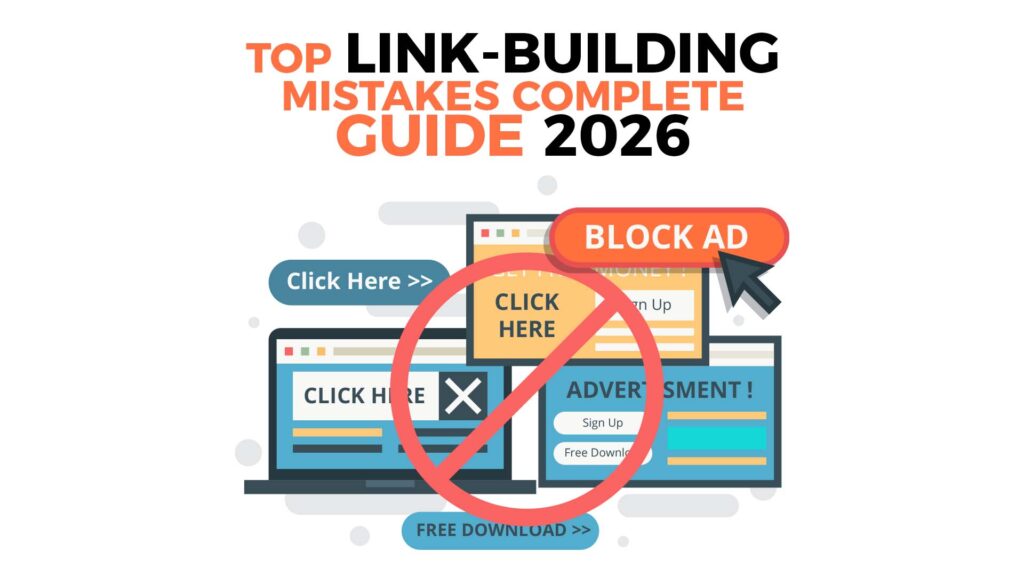
Avoiding serious link-building mistakes is critical for protecting your website’s authority and long-term search visibility. Backlinks remain one of the strongest ranking factors in modern SEO, but when built incorrectly, they can trigger penalties, ranking drops, or algorithmic suppression. Many campaigns fail not because link-building doesn’t work, but because it’s executed without strategic alignment.
Search engines like Google evaluate not only the number of backlinks but also their relevance, context, and natural placement. Poor decisions such as buying links, using private blog networks (PBNs), or over-optimizing anchor text create detectable patterns that algorithms can flag. These are not just tactical errors; they are structural risks.
This guide explores the most damaging link-building mistakes, explains why they harm rankings, and shows how to fix them. Instead of chasing shortcuts, you’ll learn sustainable approaches rooted in quality, intent, and contextual relevance, ensuring your backlink profile strengthens your SEO rather than sabotaging it.
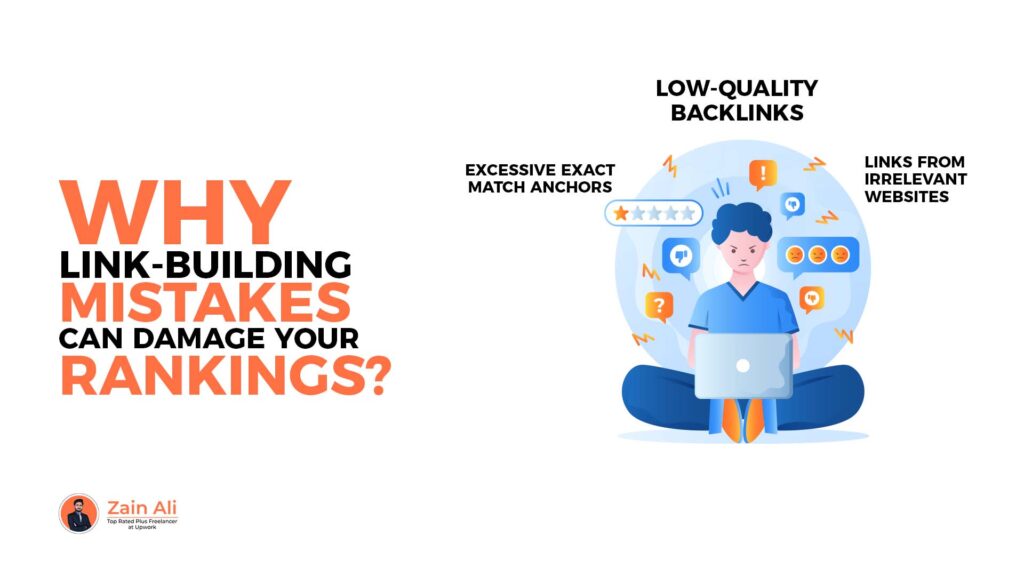
Why Link-Building Mistakes Can Damage Your Rankings?
Understanding why link-building mistakes harm rankings starts with how modern search algorithms evaluate backlinks. Search engines no longer look at links as simple votes of confidence. Instead, they analyze context, topical relevance, anchor patterns, link velocity, and overall trust signals. When a backlink profile shows unnatural behavior, it creates risk rather than authority. Search engines like Google use advanced systems to detect manipulative link schemes.
Sudden spikes in low-quality backlinks, excessive exact-match anchors, or links from irrelevant websites can trigger algorithmic filters. These signals fall under what many experts describe as SEO link-building risks, where short-term tactics create long-term damage. One of the most common link-building errors is prioritizing metrics like Domain Authority without analyzing real organic traffic or contextual relevance. A high-metric site that lacks topical alignment can dilute authority rather than strengthen it.
Common Link-Building Errors That Destroy Authority
Many websites suffer long-term ranking damage because of common link-building errors that weaken authority instead of strengthening it. One of the biggest mistakes is prioritizing quantity over quality. Accumulating hundreds of backlinks from low-value sites may look impressive in reports, but search engines evaluate contextual relevance and trust far more than raw numbers. Another damaging issue is anchor text over-optimization.
When too many backlinks use exact-match keywords, it creates an artificial pattern that algorithms can detect. This is one of the most frequent link-building mistakes to avoid, as it signals manipulation rather than natural editorial linking. Balanced anchor distribution is critical for maintaining credibility. Ignoring link relevance is equally harmful. Backlinks from unrelated niches dilute topical authority.
Buying Links and Private Blog Networks
Among the most dangerous link-building mistakes are buying backlinks and using private blog networks (PBNs). While these tactics may promise quick ranking gains, they carry significant long-term risks. Search engines like Google explicitly discourage paid link schemes designed to manipulate rankings. When detected, these tactics can lead to manual penalties or algorithmic suppression. Buying links often results in placements on low-quality or irrelevant websites. Even if a site shows high third-party metrics, it may lack genuine traffic or editorial integrity.
These artificial links create detectable patterns, increasing SEO link-building risks. Algorithms analyze link footprints, hosting similarities, and unnatural anchor distribution to identify manipulative behavior. Private blog networks are another example of bad link-building practices. PBNs rely on expired domains or interconnected sites built solely for link placement. While they may temporarily boost authority signals, they rarely offer real value to users.
Anchor Text Over-Optimization and Digital Footprints
One of the most overlooked link-building mistakes is anchor text over-optimization. Anchor text helps search engines understand what a linked page is about, but when overused or manipulated, it becomes a red flag. Excessive exact-match anchors create patterns that look artificial rather than editorially earned. This is one of the most common link-building errors that can quietly weaken your backlink profile. Search engines like Google analyze anchor distribution across your entire domain.
If a high percentage of backlinks use identical keyword anchors, it signals potential manipulation. Natural backlink profiles contain branded anchors, generic phrases, partial matches, and naked URLs. A healthy mix reflects organic linking behavior. Digital footprints are another serious issue. Repetitive anchor usage combined with links from similar site structures, hosting providers, or content templates makes detection easier. These patterns increase SEO link-building risks, especially when combined with low-quality placements or aggressive outreach campaigns.
Ignoring Relevance and Search Intent
One of the most damaging link-building mistakes is ignoring relevance and search intent when acquiring backlinks. A link from a high-metric website may look impressive, but if it lacks topical alignment, it contributes little to authority. Search engines prioritize contextual relationships between linking pages and target content, not just domain strength.
Relevance is about more than niche similarity. It also includes content depth, audience overlap, and semantic connection. When backlinks come from unrelated topics, they create a “relevancy gap” that weakens ranking signals.
Quantity vs. Quality
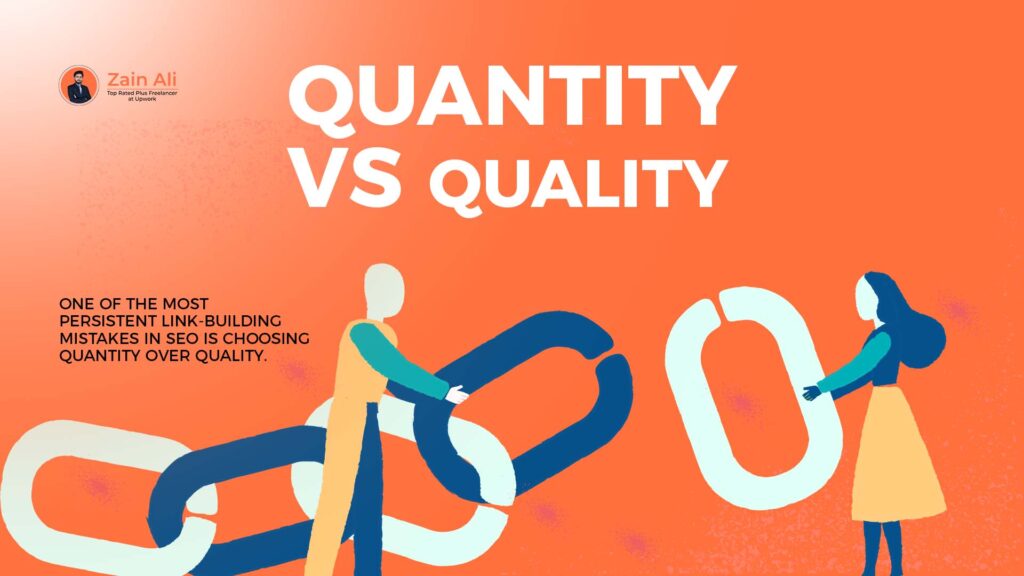
One of the most persistent link-building mistakes in SEO is choosing quantity over quality. Many campaigns focus on acquiring as many backlinks as possible without evaluating contextual strength, relevance, or editorial value. While a growing backlink count may look impressive in reports, search engines prioritize authority, trust, and semantic alignment over sheer volume. Low-quality links often come from irrelevant blogs, content farms, or sites with little real traffic.
These links rarely deliver sustainable ranking improvements and may even trigger filtering signals. Search engines like Google analyze engagement, topical consistency, and link placement quality to determine real value. A single high-authority, contextually relevant backlink can outweigh dozens of weak ones.
DA, DR, and the Authority Trap
Another major category of link-building mistakes is relying only on third-party metrics like Domain Authority (DA) or Domain Rating (DR) when evaluating backlink opportunities. While these numbers can provide a quick snapshot, they do not represent how search engines actually measure trust or relevance. Treating them as the ultimate decision factor creates what many call the “authority trap.” Search engines like Google do not use DA or DR as ranking factors.
These are proprietary scores developed by SEO tools, not official metrics. A site with high DR but low organic traffic or poor topical relevance may add little value to your backlink profile. This is one of the most overlooked common link-building errors in modern campaigns.
Ignoring Nofollow, Link Diversity, and Link Velocity
One of the subtle yet serious link-building mistakes is ignoring nofollow links, link diversity, and link velocity. Many SEO campaigns focus exclusively on dofollow backlinks, assuming they are the only links that pass value. While dofollow links contribute directly to authority signals, a completely dofollow-heavy profile can appear unnatural. A balanced backlink profile typically includes branded mentions, citations, and nofollow links that reflect organic growth.
Search engines like Google evaluate link diversity across domains, anchor types, and link attributes. If backlinks come from the same type of sites or follow predictable patterns, algorithms may detect manipulation. This is one of the most overlooked common link-building errors in aggressive campaigns. Link velocity, the speed at which backlinks are acquired, is another risk factor. Sudden spikes in backlinks without corresponding content growth raise red flags.
How to Audit and Fix Link-Building Mistakes?
Identifying and correcting link-building mistakes requires a structured backlink audit process. Without regular analysis, harmful links can accumulate quietly and weaken your authority over time. The first step is gathering a complete list of backlinks using tools such as Google Search Console and other SEO platforms. This provides visibility into referring domains, anchor text distribution, and link types. Once collected, evaluate each link for relevance, traffic quality, and editorial integrity.
Look for signs of bad link-building practices, such as links from unrelated niches, spam-heavy pages, or obvious private blog networks. Pay attention to anchor text patterns; overuse of exact-match keywords is one of the most common link-building errors that needs correction. Next, categorize links into safe, questionable, and toxic groups. Toxic backlinks may require outreach for removal or submission to Google’s disavow tool. However, disavowing should be used cautiously and only when necessary.
Conclusion
Avoiding critical link-building mistakes is essential for protecting your website’s authority and long-term search performance. While backlinks remain one of the strongest ranking factors, they must be earned and managed strategically. Shortcuts such as buying links, over-optimizing anchors, ignoring relevance, or relying solely on metrics often create hidden risks that eventually surface in ranking drops or penalties.
Search engines like Google prioritize contextual relevance, natural growth, and editorial integrity. A sustainable backlink profile includes diverse anchor text, balanced link types, steady link velocity, and placements from genuinely relevant sources. Avoiding common link-building errors ensures your efforts strengthen authority instead of weakening trust.